Future of Rail | Railway route restoration
Rail key to connectivity
While debate about the final scope on High Speed 2 rages, demand for restoring local rail connections is gaining traction. Claire Smith looks at the project pipeline.
As plans to scale back High Speed 2’s (HS2’s) design hit the headlines in February, chancellor Jeremy Hunt revealed his ambition to have a network of high speed rail links in the UK.
He failed to specify where his suggested HS3, HS4 or HS5 would go, when they would be built or how they would be funded. But it was clear that he sees all types of rail as fulfilling a key role in providing transport connectivity and decarbonisation in the UK.
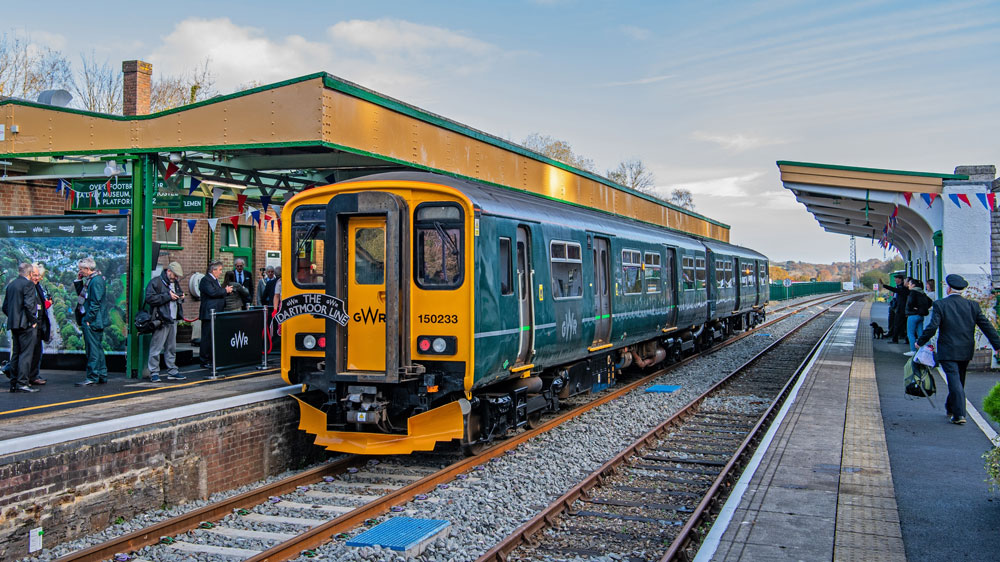 The revived Oakhampton to Exeter line has attracted 2,000 passengers a month since it reopened in November 2021
Speaking at an All Party Parliamentary Group on Infrastructure (APPGI) reception at the ICE in February, Hunt said: “If I look at transport infrastructure, I made big decisions to protect HS2, the core of Northern Powerhouse Rail and some of our major transport infrastructure projects in the Autumn Statement, despite the fact we were cutting a lot of other spending.
“I think it is absolutely essential for our social cohesion, as well as our economic prosperity, that we develop a growth model that isn’t just focused on London and the South East. This means we must build much better [rail] connectivity around the whole country.”
There has been a lot of change in government in the last three years and the pandemic has had a big impact on travel patterns. But there remains firm support for reconnecting local rail services. One of the key drivers was the launch of the Restoring Your Railway (RYR) fund in January 2020. For this the government pledged £500M for the Department for Transport (DfT) and Network Rail to jointly deliver on Conservative Party manifesto commitments to start reopen lines and stations as part of the Levelling Up agenda.
The poster child of the initiative is the Dartmoor Line between Okehampton and Exeter in Devon. It reopened to passenger trains for the first time in 50 years in November 2021.
“We must build much better [rail] connectivity around the whole country.
The project received £40M from the RYR fund and the DfT, Network Rail and Great Western Railway collaborated to deliver the project in less than nine months.
Since reopening, the line has attracted 2,000 passengers a month and plans were unveiled in January for a new railway station on the line near Okehampton, securing £13.4M through the Levelling Up fund.
The next big success story for the RYR fund is anticipated to be the Northumberland Line which is expected to open at the end of this year. It will restore passenger services between Newcastle-uponTyne and Ashington.
In January 2021, the project won £34M of RYR funding to deliver a service with two trains per hour and six new stations, including two stations serving the Blyth area and one connecting to the Newcastle Metro service.
According to the DfT, the services along the line will improve connectivity between deprived communities in south east Northumberland and job opportunities in Tyne & Wear.
Other RYR fund projects to have reached the construction stage are new stations on existing lines. Three – White Rose on the Huddersfield Line, Thanet Parkway in Kent and Marsh Barton in Devon – are expected to open this year, while the new stations at Thorpe Park in Leeds, Edginswell in Devon and St Clears in Pembrokeshire will open in 2024.
KEY FACT
£500MSum pledged by the government for the Restoring Your Railway fund in January 2020
Waiting in the wings to become the next RYR-funded rail line to move onto site – hopefully next year – is the Portishead Line restoration.
Network Rail awarded a £50M design and build contract for the work to VolkerFitzpatrick in February.
The contract is in two stages, with an initial £6.14M for the design which includes 5.5km of new railway between Pill and Portishead, with new stations for both towns. A business case will then be put forward in spring 2024, after which VolkerFitzpatrick will construct the line if it is given the green light.
The RYR fund has created real momentum around the potential former railway rail lines offer for improving connectivity and lots more projects are now being proposed (see article Projects in the pipeline).
Nonetheless, just as it was during the Beeching cuts era, all of these revived lines have to stack up financially. For this reason, some proposals have been scrapped. These include the Bury-Heywood-Rochdale line restoration – which was initially backed in the same tranche of RYR funding as the Dartmoor Line.
Transport secretary Mark Harper said in January that the application to restore the abandoned BuryHeywood-Rochdale line would not progress further owing to “cost and wider capacity challenges”. But he added that “the scheme would be best considered as part of Greater Manchester’s City Region Sustainable Transport Settlement programme”, suggesting that the idea may have local merit.
What is clear is that many local authorities see letting the train take the strain as being critical to reducing reliance on private cars – and ultimately decarbonisation of transport.
FINDING NEW PURPOSE
Not all old railway infrastructure has a future in rail – some assets are being repurposed to bring other benefits for the local communities that surround them.
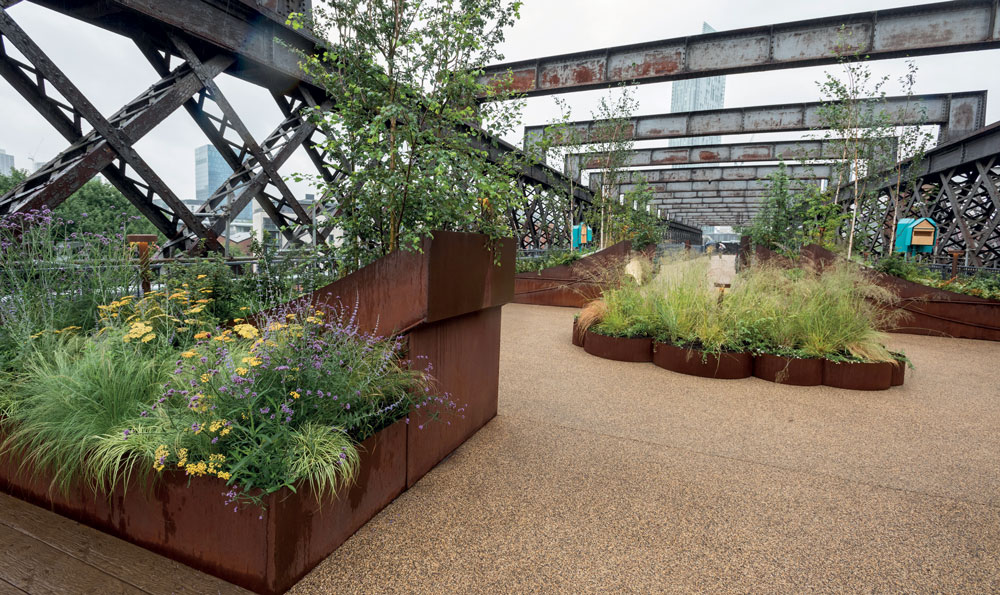 In Castlefield, Manchester a 330m disused railway viaduct reopened last year as an urban sky park following restoration work by contractor MC Construction for a project led by the National Trust. In the place of tracks, there are now trees, plants and flowers and information about the 130-year-old structure’s history.
Moxon Architects unveiled similar plans for the Grade II listed Barnes Bridge across the River Thames in West London last summer. In addition to creating a pedestrian path and park above the river, the former rail bridge will create step-free access to Barnes Bridge Railway station.
Former railway lines have long been turned over to active travel routes and this has been a key argument against National Highways’ infilling of bridges that form part of the Historic Railway Estate.
One of the latest former rail lines to gain 18km long Sheppey Light Railway line which closed in 1950. Plans to reopen it for pedestrians and cyclists started 15 years ago and Swale Council has now backed the proposal giving the scheme a greater opportunity to progress.