Future of Net Zero | Carbon calculator
Footprint formula
Stakeholders in a new mixed-use development in the United States have cut embodied carbon during the project’s design phase thanks to an accessible calculation tool. Rob Hakimian reports
United States consultant Thornton Tomasetti has slashed embodied carbon on one of its projects by 40% to U 234tCO2e/m2 during the design phase. It has done so using a free-to-download carbon calculator developed by the Institution of Structural Engineers (IStructE).
The consultant worked with architects Studio Gang and master planned communities developer Howard Hughes Corporation on the mixed-use project. They harnessed the power of the carbon calculation tool to bring several different collaborators together so they could understand the effort to reduce embodied carbon.
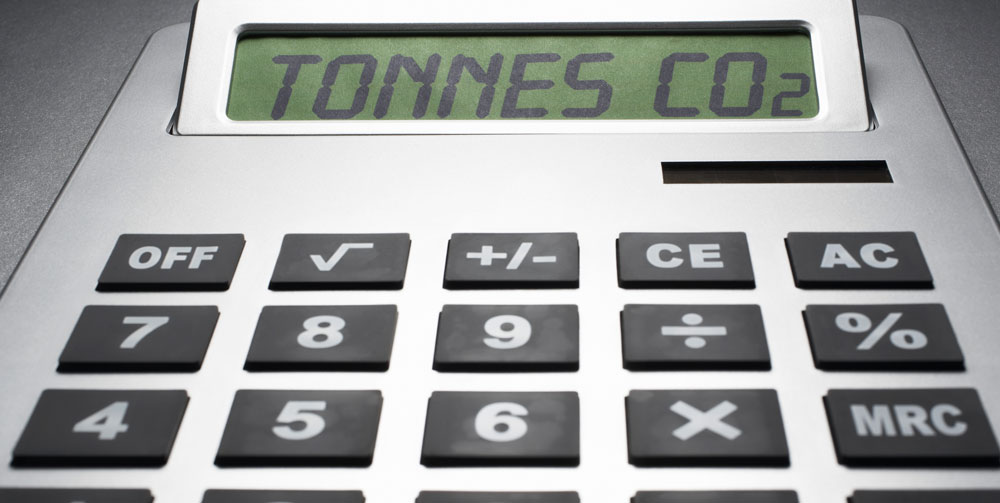 The IStructE tool enables whole project teams to collaborate on carbon reduction at the design stage of a project
Thornton Tomasetti structural engineering principal Tanya de Hoog says that engineers often wait until certain ideas have been set in stone before they offer solutions for carbon reduction. But she says that having the data from the calculator at an early stage allowed the project team to communicate possibilities for reducing carbon sooner with a greater resulting impact.
Thornton Tomasetti sustainability associate director Duncan Cox agrees: “It gets that engagement from all parties very early, which is one of the biggest battles we have. It sort of demystifies the process of doing embodied carbon studies. It’s not a full life cycle assessment but it gives enough information to make decisions.”
The fact that all stakeholders could access the tool ensured that everyone was on the same page on the effort to reduce the project’s embodied carbon.
“Having a tool that was accessible and easy to use by anybody is one of the key things that helped to visually communicate to the whole design team and client teams with varied levels of embodied carbon understanding what the possibilities might be,” de Hoog says. “We knew that it might not be realistic to get to net zero for this project without carbon offsets, but with the tool we could home in on materials and design efficiency studies to show what’s probable.”
DEVELOPING THE TOOL
The IStructE tool was developed after the institution published a guide called How to Calculate Embodied Carbon in 2020. While feedback was positive, there was an immediate demand for a digital tool that did the calculations automatically.
The institution was approached by several of its members offering their own carbon calculation tools for adaptation. IStructE head of climate action Will Arnold looked through them and found that the one closest to what he envisioned was created by civil and structural engineering consultant ElliottWood.
ElliottWood and the IStructE collaborated to adapt the tool over several months using IStructE parameters and Arnold’s vision of how to make it accessible.
“I wanted it to be simple enough that a complete novice could pick it up and use it to very quickly work out the embodied carbon footprint of a project,” he says. “Then I wanted it to be customisable so a more advanced user could take it to bits and do other things with it, such as [adding]
different carbon factors.”
Once complete, the Structural Carbon Tool was made freely available to download from the IStructE website.
KEY FACT
40%Carbon cut at the design phase by Thornton Tomasetti’s use of the calculator
USING THE TOOL
The tool is based on an easy-to-use Excel spreadsheet with clear signposts for inputting the materials to be used, what they will be used for and expected quantities.
The formulas in the tool instantly produce raw figures of embodied carbon as well as charts to show where in the structure the embodied carbon is concentrated, such as piling, floor slabs or roof frames.
They can then determine whether the scheme complies with the requirements of the Structural Carbon Rating Scheme and targets set by the Royal Institute of British Architects and the London Energy Transformation Initiative. The tool also provides easy-to-understand comparisons, for example with the number of flights between London and New York using the equivalent embodied carbon.
This allows users to see easily where materials or quantities can be changed and the tool immediately produces new embodied carbon figures and diagrams.
While many of the world’s biggest firms have their own in-house carbon calculation tools, there are hundreds of companies which do not.
“We made this tool because the SMEs out there don’t have one and don’t have time to make one,” Arnold says.
THE TOOL IN ACTION
The mixed-use development designed by Thornton Tomasetti, Studio Gang and Howard Hughes Corporation was initially calculated to have a carbon cost of 374tCO2e/m2. By changing the material for the floor slabs from concrete to timber and by reducing the volume of concrete through design efficiencies primarily in the floor slabs, lateral core and foundations, the calculated embodied carbon of the structure at the scheme design phase was reduced to 234tCO2e/m2 – a reduction of 40%.
“We knew that in this one it was the horizontal elements – the floors and the framing of the floors – that had the biggest impact, as is often the case,” de Hoog explains.
“The tool enabled us to have a conversation with the architect and client team and say ‘this idea is a better balance of spatial quality and environmental performance’ using real data.”
“The tool enabled us to have a conversation with the architect and client team using real data
Studio Gang design director Lara Kaufman says that the tool changed the conversations and thinking about the development’s design.
“Architects work in models – very abstract representations of a building – but with embodied carbon part of the conversation from the beginning, the materials of the project become a real consideration,” she explains.
“You need to think about the concrete as concrete and get into the details of what it is and where it’s coming from, which is such a great awareness to have.”
It also increases the efficiency of decision making in the early stages.
Howard Hughes Corporation senior vice president of environmental, social and governance strategy Gautami Palanki says: “In the design phase, these decisions need to be studied, analysed and made pretty quickly, because if we miss that window, it can’t be changed,” she explains.
“So when our partners like Thornton Tomasetti and Studio Gang bring us quantitative information and graphs that support the recommendations, it makes that time-sensitive decision much easier. People tend to think that carbon calculations can wait until later in the process or when there’s a BIM [building information modelling] model. While this is important and necessary, it’s too late to make big impacts at that point,” de Hoog says. “I think that’s where this tool is a differentiator.”